
I'm old enough to remember when there was no e-mail and I have no doubt that it has revolutionized the way we do business and coupled with smart phones, it enables us to work from any place at any time. This is good if you'd rather handle correspondence from your Muskoka dock, but bad if you're expected to respond to e-mails during your daughter's dance recital.
But e-mail's greatest benefit - quick and easy communication - is also its biggest downfall because it doesn't account for the limitations of the human brain. While some of us can manage multiple tasks at once, research has shown that none of us do it well, and with the same kind of attention to detail we would apply to single tasks. And with many people juggling multiple email accounts, Twitter handles, Facebook pages and Blackberry messenger contacts, it's inevitable that eventually, a mistake will be made and the wrong message will be sent to the wrong person. If you have done this, you know that it creates an extremely uncomfortable situation, for both the sender and the recipient.
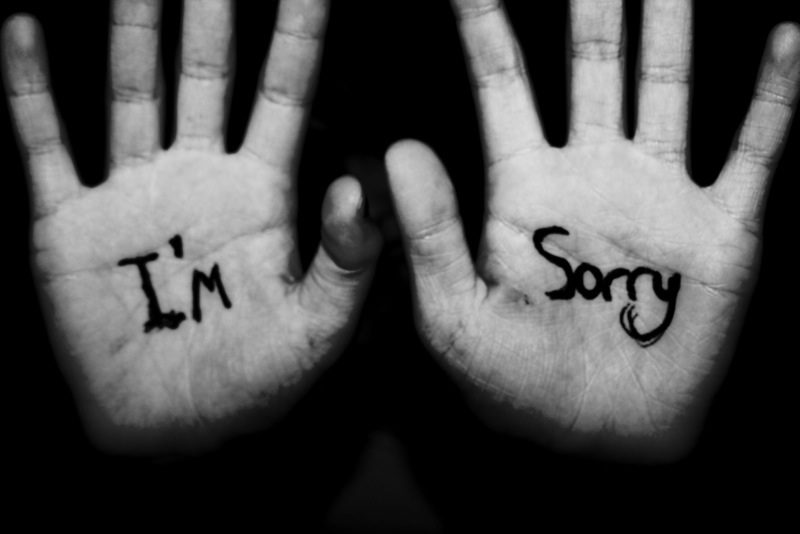
I had my own e-mail mishap several years ago. A situation had been annoying me for a while and rather than dealing with it in a mature and forthright way, I chose to kvetch to someone else by e-mail, only I accidentally sent it to the subject of my aggravation. While the message was more factual than gossippy it was still derogatory and was the kind of content that belonged in a private conversation, not an electronic missive. I realized my gaffe about a nanosecond after I hit Send and the ensuing physical reaction was quite remarkable. Within two minutes, my heart was pounding, my palms were sweaty, a hive-like crimson flush was breaking out across my face and an unprintable string of profanity was coming out of my mouth. I believe it was the modern-day equivalent of the fight or flight response our neanderthal ancestors experienced when confronted by a hungry sabre-tooth tiger. Our bodies send out a shot of adrenaline to help us deal with a perceived danger but while the caveman used the adrenaline to hurl a spear at the tiger or high-tail it out of there, my adrenaline just collected and pooled in the pit of my stomach until I felt quite sick.
In my panic, I immediately sent a quickly-crafted apology email which acknowledged my guilt but didn't do anything to repair the damage or address the underlying issues. At the time, I had just finished reading The FourAgreements by Don Miguel Ruiz. If you haven't read this book, I recommend it. It's a quick, light read and helps you put life's ups and downs in perspective. In short, the four agreements are 1. Be impeccable with your word, 2. Don't take anything personally, 3. Don't make assumptions and 4. Always do your best.
Since the text was fresh in my mind, I decided to apply it to the matter at hand. Obviously I had failed miserably at Agreement #1 as I had used my words carelessly but I was determined to rectify the situation in a more appropriate way. Ruiz spends almost an entire chapter on apologies and the fact that humans are the only species who relive a mistake over and over. His advice, (which is infinitely easier said than done) is to apologize quickly and sincerely and then let it go. The rest is up to the other person. So, tail between my legs, I went to see the recipient of my misfired e-mail and apologized, in person. While she accepted my apology with grace, it took a while for us to rebuild our relationship and it actually took a similar mistake on her part for it to return to normal, our mutual errors having cancelled each other out to the point that neither existed anymore and the air was finally cleared.
There are many lessons here - address issues before they get out of hand, don't use e-mail to deliver sensitive information, always double-check the To and CC boxes before you send but in my experience, most people only make a mistake like this once. The experience is too traumatic to be repeated.


 Posts
Posts


