Showing posts with label Annoying Behaviour. Show all posts

Thursday, September 20, 2012

How about a complaints democracy for volunteer organizations?


I am involved in various ways with a few different organizations that are staffed almost exclusively by volunteers.  Most of these volunteers also have day jobs and family responsibilities.  They have taken on the extra, unpaid work because they are passionate about the organization's mission or mandate and because it has an impact on their professional or personal lives.

Not everyone is suited to chair a committee or mobilize a team.  As with paid work, some people are the organizers, some are the planners and others show up to collect the tickets, serve the food or knock on the doors.  Some people don't have the time or inclination to volunteer and that's fine as well.  It's all optional.

Common across all volunteer organizations, are the complainers, questioners and advice-givers.  These are the people who didn't like the hot dogs at the charity BBQ, ask why you send out weekly emails on Thursdays instead of Fridays and helpfully suggest that you use an inordinate amount of your budget to "go green".

Some of these people have voices that are so loud and mannerisms that are so intimidating that even if they're the only person in a group of 20 who holds a particular opinion, no one challenges them.

When you pay an individual or a corporation for a service and that service is not delivered according to your standards, feel free to complain to anyone who will listen and to escalate your complaint until you receive a satisfactory resolution.   When dealing with volunteers, however, I'd like to see people adopt a more democratic process where the squeaky wheel finds no purchase and good enough is actually considered good enough.

The next time you want to offer a suggestion about how a volunteer can "do things better", ask these questions:

Is the volunteer doing something illegal, unethical or otherwise jeopardizing the reputation of the organization? - If the answer is yes, then this is a legitimate complaint that needs to be dealt with at a high level.  If the answer is no, ponder the following questions:

Is my suggestion actually feasible and can it realistically be executed using the current resources and within the existing time frame and regulatory constraints of the organization?  If not, shelf it or suggest a brainstorming session where people can share out-of-the-box ideas for future consideration.

Will my suggestion benefit other members of the organization or am I just airing my personal grievances? Before lodging a complaint, chat with others to see if it's a common problem. If it is, the association will probably appreciate the feedback.  If it's more personal in nature, let it go.  It's not useful.

Is my suggestion an easy fix or am I just adding to the workload of a volunteer who is already stretched too thin?  Most volunteers are open to questions and even complaints but few appreciate suggestions that pile even more work onto their plates.

Am I willing to participate in the solution or do I simply want to complain and let others do the heavy lifting? If you feel really strongly that something needs to be changed, offer to do some of the legwork to make it happen.  It will go a long way.

What do you think?  Should people be allowed to complain about anything they want?  Am I being too harsh? Are there any other questions complainers should ask themselves?


Thursday, August 9, 2012

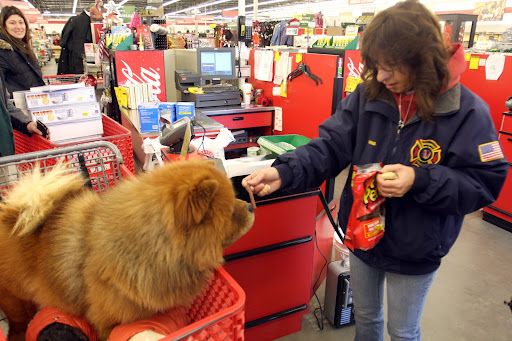
8 Commandments of the Checkout Line


The funny thing about etiquette is, it’s the little things that drive us nuts.  Sure, there are thousands of etiquette books and hundreds of guidelines about netiquette and dress codes and proper forms of introduction but when it comes right down to it, we become most infuriated when people violate the small, unwritten rules of civility.  Few of us are offended if someone wears white after Labour Day or sticks their name tag on the wrong side of their body, but try to sneak 11 items into the express checkout lane and we turn into Emily Post.  In my observations of everyday etiquette, I have noticed that the grocery store checkout lane is a bottomless pit of bad manners so I thought I’d address some of the worst offences here, in Moses style.

1. Thou shalt not disobey the express checkout rules – If you’re able to shop for, and pay for, groceries on your own, you must know how to count to 10 (or eight, or whatever the case may be where you shop).  Eleven is not 10.  Twelve is not 10.  Only 10 is 10.  And, in case you’re wondering, two of the same item still counts as two, not one.

2. Thou shalt have your cards ready – Before you enter the store, or at least when your groceries are being checked through, locate the card you wish to pay with.  Nothing is more frustrating than seeing someone dig through a wallet or bag searching for an elusive debit, credit or worse, points card, while a lineup of shoppers fumes behind them.  Have your payment card at the ready and if you can’t find your Air Miles or PC Points card, just leave it and vow to be more organized next time.  I actually stood in line once while a cashier let someone go out to their car to look for a points card.

3. Thou shalt not force price checks – I get it. There’s nothing worse than picking up ten frozen pizzas because you think they’re $2.99, only to see them clock in at $5.99 but that doesn’t mean you can hold up the entire line to prove a point.  If the deal was advertised in the flyer, show it to the cashier.  If you thought you saw a sign, and there aren’t too many others in line, have them check.  But holding up five other shoppers because you’re convinced the margarine was $.10 off when you have no evidence to back it up, is not cool.

4. Thou shalt prequalify your coupons – So you’ve seen Extreme Couponing and you want to get in on the action.  Fine, frugality is good.  But, as a fellow couponer, I can tell you that Canadian coupons are much more restrictive than their U.S. counterparts and your efforts to save money will often be stymied by expiration dates, quantity limits and pairing restrictions.  Coupons are great but before you dig through your purse for that that crumpled scrap entitling you to $.50 off cheese strings, read the fine print.

5. Thou shalt try to pack your groceries quickly – Now that we pay for plastic bags and stores no longer pay teenagers to bag our purchases, many of us have to cram our fish fingers and milk into a mish-mash of reusuable bags, bins and backpacks.  Understandably, this takes time but there’s no need to be a perfectionist about it.  Finish the job as quickly as possible and move on so that the next customer can use the conveyor belt. 

6. Thou shalt not alleviate boredom by talking into your cell phone – I know checkout lines are boring but that’s what the National Enquirer is for.  If three-headed dogs aren’t your thing, browse the news on your smart phone but refrain from long, annoying conversations.  Remember that the people sharing the line with you are trapped and can’t get away from your inane conversation. If you can’t resist, at least hang up when it’s time to pay.  Trying to fish a credit card out of your wallet while simultaneously bending your head to keep your phone from falling, all while having a conversation, is not only time-consuming, it’s disrespectful.  

7. Thou shalt behave if you’re allowed to go ahead – Once in a while, you will find yourself behind someone with a bulging cart when you only have two things.  Depending on their mood, time constraints and level of awareness, they may let you go in front of them.  They may not and that’s their prerogative.  If they do let you go ahead, you must not hold them up in any way.  That means no questions, no price checks, no haggling over price.

8. Thou shalt not chit-chat – This is not really an issue in a large city where most transactions are anonymous and the chances that you know a cashier personally are minimal.  However, in the small town where I grew up, it’s not uncommon to wait in a checkout line while the customer in front of you chats with the cashier, getting caught up on everything from her mother’s hip replacement to the upcoming Rotary BBQ at the arena.  I know this is lovely and we all need to smell the roses, etc. but when people are waiting in line, it’s best to keep social chat for social events.

Is there anything you would like to add to the checkout line commandments?  I would love it if I could get two more to make an even ten. 

Tuesday, May 29, 2012

Should you disrupt your primary job function to be "nice"?


But I was just trying to be nice...

Last weekend, I left the cottage with my kids to return to Toronto for an afternoon engagement.  I had just enough time to get there with one coffee stop and one bathroom break. Yes,  I should have given myself more time but that's another story.

Feeling groggy and facing a three-hour car trip, I decided to pick up some coffee at a local coffee shop to steel myself for the trip. I won't name the coffee chain here but it is a huge chain with a great deal of Canadian share of heart and a long history in this country.  Some would characterize their coffee as uninspired but I like it.  It's mild and reliable and I know exactly how it will taste and that appeals to me. 

Mindful of my impending deadline, I checked the drive-thru line and since there were only two cars in it, I calculated I could complete my transaction in five minutes, seven if someone was ordering a sandwich.  I would have gone into the store but I was alone with my kids and wasn't in the mood for what would happen if they came face to face with the doughnut display case.

When I joined the drive-thru line, I was third.  One car was at the window already and another had just placed an order.  After ten minutes, the line hadn't budged and new cars had joined in behind me.  I assumed that perhaps the driver in the first car had ordered breakfast for several people and it was taking a while to microwave the eggs and sausage.  After 15 minutes,  there were eight cars behind me and I started to worry that something was wrong and the mechanism that signals waiting cars to the drive-through was malfunctioning.  So, jammed in a static line with no way out, I did something I almost never do.  I honked my horn, quickly and only once.  Seconds later, a furious voice came through the order speaker announcing that the staff of this particular coffee chain do not appreciate it when people in the drive-thru honk their horns and to stop it at once.

Soundly put in my place, I slunk down in my seat and waited my turn.  Finally the first car drove off, the second one was dealt with quickly and I sheepishly pulled up to the window.  If looks could kill, I wouldn't be here to write this post so, I smiled wanly at the clerk and explained hat I had honked my horn because I became frustrated with the delay and lack of communication.  She smiled back and said, "Oh, that's okay. The driver of the first car was going somewhere and asked us for directions.  Two of us were trying to help him get where he was going."

I was floored.  I know that she truly believed that by explaining that the holdup was due to their efforts to be nice, I would trade in my impatient attitude for a newly-acquired appreciation of their sense of community. Sadly, it had the opposite effect.  Although I didn't verbalize it, inside I was thinking, "I waited for 20 minutes so you could give someone driving directions?"  At this point, I just wanted to pay for my coffee and get out of there, which I did, after lifting the lid to make sure all looked normal.

I fumed all the way home and pondered why I was so upset about what was, at its base, a gesture of kindness.  It occurred to me that, in our paid work, whatever that might be, we all have things that are considered our primary function.  A plumber's primary function is to repair broken pipes, a coffee chain employee's primary function is to serve coffee and in my role as a freelance communicator, my primary function would be to communicate on behalf of my clients.  In the course of our day to day life, we also encounter requests for help or other interruptions, that do not coincide with the primary functions of our paid work but could be considered part of the primary function of our existence as human beings and citizens in a society.  But we can't respond to everything that is put in our path. We need to assess, consider the consequences and make decisions.  While most people would willingly arrive late at a meeting so they can help the victim of a car accident, it's probably not a good idea to make customers wait 20 minutes for coffee so you can tell someone how to get to a bed and breakfast.  In this case, there was an easy fix.  The coffee chain employee could simply have asked the driver to pull over, come into the store and wait until there was a lull in the customer traffic.  

Later on that day, I tweeted to the coffee chain that I had experienced a service disruption in one of their franchises.  They responded immediately and suggested I call their guest services line so that I might explain the situation in detail the next morning.  I did so, spoke with a wonderful woman who apologized profusely and promised to follow up with the store in question.  

Overall, I was pleased with the customer service response and I hung up the phone, relieved that, despite a small blip, I had been treated with respect and kindness and could continue to patronize my favourite coffee shop. 

Thursday, May 17, 2012

Is it still rude to wear a hat indoors?


But it's part of my outfit...


I was at a business event the other night with about 200 other people.  The guest speaker was great and the topic was relevant but throughout the night, I was distracted by something that other people may not have noticed - a young man wearing a fedora indoors.

The 'No Hats Inside Rule' was strictly enforced in my childhood home and is so ingrained in my psyche that when someone violates this etiquette guideline, it just feels wrong, like snow in summer or a cheerful DMV employee.

I have carried over this particular rule to my own home and family.  My kids and their visiting friends know they are not allowed to wear their hats inside and absolutely must remove them for meals. If I'm out for dinner with my peers and one keeps a hat on during the meal, I would never ask them to remove it (that would be rude) but it will annoy me for the duration. Of course, that is my problem, not theirs.

But times change and well-intentioned rules are relaxed or abandoned all together for reasons of practicality or enlightenment. The rule of removing hats indoors was established decades ago when men regularly wore hats outside to protect them from the elements.  They removed the hat indoors so that the elements (rain, dirt, etc.) did not fall onto meals or other people.  Where did they put their hats?  Well they probably checked them with a coat attendant who knew how to properly store them so they didn't get smushed.  It's unlikely that the same service is available today in most establishments.

Today, hats are a fashion statement for both genders and can be such a part of one's "look" that asking someone to remove their hat is akin to suggesting that they take off their shoes.  There are other things to consider.  Many of the etiquette rules that formed the North American approach to acceptable social behaviour were written at a time when the population (or at least the ruling class) was homogeneous in terms of religion and therefore, didn't take into account the need to observe the customs of faith by wearing hats or head coverings indoors.  The Emily Post Institute notes this in its updated, more modern list of acceptable places to wear hats, as well as the fact that cancer patients need not worry about this rule.

So, like so many other "old-fashioned" guidelines, the "no hat" rule will probably fall by the wayside in the next few years for reasons that include an embrace of different cultures and a general relaxation of appropriate attire.  I can accept that, but I don't think I will ever be able to stomach a baseball hat worn indoors at any time.

What do you think?  Do you have guidelines about hats in your home?  Does it annoy you when a man doesn't remove a fedora indoors?  Would you even notice?


Monday, May 7, 2012

8 Questions to Ask Yourself Before Burning A Bridge

To my knowledge, I have burned four bridges in my career.  It's possible that I have unknowingly and unwittingly burned more and that other people have burned bridges with me (with or without my knowledge).  But, there have only been four times in two decades (one every five years or so) that I have deliberately and willingly decided to end a business relationship in a way that clearly demonstrates there is no possibility of ever working with that person again.

Burning a bridge is a bold career move that is sometimes necessary and often misguided but it always feels great, if only fleetingly.  Many dysfunctional business relationships can come to a natural end without the need to torch anything.  People are fired and laid off everyday without the need for drama and business partners, clients and consultants often realize that they are not a good match and go their separate ways with a handshake and an assurance that they will be civil if they bump into each other on the street.

Burning a bridge usually means you leave a business relationship by telling your boss/colleagues/partner/client exactly what you think of them and their methods in no uncertain terms.  You might even channel your inner Scarlett O'Hara and declare that "as God is your witness, you will never cross paths with them again".  Highly unlikely if you work in the same industry but full of impact nonetheless.  Others burn bridges in more passive ways, simply disappearing, not showing up for work, refusing to answer phone calls, etc.  In this case, their silence speaks volumes.

It's hard to have a successful career without lighting a few flames but you should do so judiciously and ask yourself the following questions before you pour the gasoline:

1. Was this person's behaviour truly abusive, egregious or unethical? 
There's a big difference between someone who is incompetent or a bad fit and someone who is abusive.  We have all had our share of crappy bosses and catty coworkers but unless their behaviour can truly be described as abusive, just move on and chalk it up to a learning experience.

2. Do I plan to continue working in this industry?
If the answer is yes, then think twice.  It's a small world and you'll likely encounter the person again. I once purposely burned a bridge with someone I considered unethical and years later, he showed up as a valued partner in a piece of business I wanted to win.  When I found out he was involved, I backed out, but it was lost revenue nonetheless.

3. Is my reputation strong enough to withstand this? 
Have you spent years helping others,  building your reputation, growing your network and collecting a portfolio of good work?  If so, you can probably survive any mudslinging that arises as a result of this situation but if you're just starting out or your reputation is already on shaky ground, walk away quietly and regroup.

4. Do I need this person for a reference?
No matter how much you may dislike someone, unless you already have three solid references to present at future job interviews, don't burn the bridge.  I've been shocked to see some people dramatically burn a bridge in writing at their very first real job and then actually ask that person for a reference later.

5. Can I burn a bridge in a dignified manner?
Don't just explode in a hail of profanity. That's all that will be remembered. If you're going to have this conversation with someone, do it with as much class as you can muster.  Plan your departure in advance and choose your words carefully.  Leave out personal insults and petty grievances.  They'll only weaken your case.

6. Is it really necessary to put it in writing?
So you've decided to burn a bridge.  Why create an everlasting archive by putting it in an email or letter?  Simply meet with the person in question and explain why you will no longer do business with them.  I know some disgruntled employees have received front-page coverage with spectacular public resignation letters  but that just paints you as an attention-seeking troublemaker, not an ideal future employee.

7. Did I play a role in the breakdown of this relationship?
Is this a case where you did your very best, worked hard, followed through and acted professionally but were still treated poorly?  If so, get out the propane torch.  But think seriously about your role, if any, in how things went awry.  Unless you come out squeaky clean, it might not be worth it to play the blame game.

8. Do you have the stomach to handle the potential outcomes?
You just want to say your piece and move on to greener pastures but the object of your wrath might not cooperate.  They might fight back, take it public or launch a smear campaign against you.  Are you okay with that?  If not, you may not have the stomach to handle burning bridges.  Better to take the high road and focus on more positive things.

Wednesday, March 7, 2012

Should parents make their adult children send thank you cards?


I'm still waiting...


If you read this blog or follow my tweets, you'll know I'm a big believer in thank you cards, the old-fashioned handwritten ones, not the e-mail versions that are so popular nowadays.  But, as I'm not a complete Luddite, I realize that many people don't write cards any more and I'll take an electronic thank you over nothing at all, which is also sadly becoming commonplace.

A while ago I wrote a blog post about five occasions that require a thank-you card so I won't list them here but suffice to say, a proper thank you is required anytime someone gives you a gift.  As a mother of young children, I consider it my responsibility to ensure that my sons write cards of gratitude for most gifts they receive.  If five friends come to their birthday party and leave with loot bags, the thank-yous are said when the gift is received and I don't feel a more formal follow-up is required.  However, if grandma or another friend or relative takes the time to give them something special, and especially if the gift is sent through the mail, thank-you cards are mandatory.

Wednesday, February 22, 2012

Is Profanity Really As Bad As All That?


Bleep, bleep...


I ventured to a clearance outlet store yesterday.  I usually try to avoid these places, not out of snobbery, but because I hate the long lineups that seem to be a fixture in any retail outlet that promises to save, save, save you money.  But, I needed something that is out of season and therefore, unavailable in "normal" stores.  I found what I was looking for quickly and joined a line of about 20 people waiting to be served by one cashier.  The wait was unpleasant, the surroundings were unattractive and the temperature was stifling but since I anticipated as much ahead of time, I settled in and read the news on my Blackberry to pass the time.  Aside: what did people do to alleviate boredom before smartphones?

When I was second from the front, a customer arrived out of nowhere laden down with purchases and promptly walked up to the cashier.  The man in front of me, with a heavily pregnant wife in tow, told her loudly that there was a line and she belonged at the back of it.  She looked around and murmured sweetly that she didn't notice there was a line.  Personally, I think she was faking it and taking her chances but no matter, she shuffled to the back, professing her innocence all the way.

When it was his turn to go to the cash, the loud man seemed agitated and jumpy.  From what I could see, he was trying to negotiate a transaction that was either outside of the store's policies or that the cashier was unable or unwilling to complete.  In the meantime, a second cashier arrived back from her lunch break so I was served immediately.  As I was paying for my purchase, I could sense that things were getting quite heated over at the other cash station as the man's irritation bubbled over and a few seconds later, he yelled, "Bleep this.  I'm so sick of this bleeping bullshit.  This is the reason I waited in the bleeping line for so bleeping long" and marched out of the store.

For a rare moment, everyone was silent - the employees, the people in the lineup and the other shoppers milling around the store - and just stared slack-jawed at the man, unsure if their ears had deceived them.  Somewhat unwisely, the cashier left her post to chase after him yelling, "Swearing is not tolerated in our store under any circumstances.  You can't treat me like that".  While the people still in line seemed sympathetic, I don't think they appreciated having to wait even longer while she attempted to avenge the injustice.

My own cashier was quite taken aback and I had to wait a few minutes while she composed herself.  With my Scottish background, I'm used to profanity-laden outbursts, fueled sometimes, but not always, by an excessive intake of alcohol. I told her that the guy probably just had a bad day and this might have been the final straw and we can never take these kinds of things personally.  She responded with conviction, "A grown man needs to be able to handle himself without using those words."  Anxious to move along, I nodded my head but the thing is, while I care about etiquette and civility, I actually don't find profanity that offensive. I'm not saying we should all give up on polite conversation and start tossing around swear words in every conversation, it doesn't shock or bother me that people resort to it when they're pushed to the limit.  To me, they are just words and they're incredibly uninspired ones at that.  I've known enough amazing wordsmiths in my life who can cut people down to size in a much harsher way without a single four-letter word.  For a great example of this, catch Maggie Smith's portrayal of the Dowager Countess in Downton Abbey.

When people reach this level of anger, they're usually dealing with a bunch of their own stuff and the circumstances that finally send them off the deep end are just the final straw.  The person on the receiving end usually just happens to be in the wrong place at the wrong time.  Maybe I'm cutting the guy some slack because I have had my fair share of awful customer service experiences where I too, have felt so belittled and stepped upon that I wondered if swearing like a drunken sailor could be the only thing that gets through to an uncaring store employee.  My husband, who is often on construction sites where handling problems with profanity is the norm, says it's liberating not to have to dance around issues with political correctness and politeness when you can take care of it swiftly with a few choice swear words and move on.

I'm not advocating that workplaces everywhere should adopt an anything goes approach to coarse language.  But, I guess for me, actions speak louder than words.  What's your take?  Are the words important or the fact that someone has been made so angry that they felt they had no choice but to use them?

Thursday, January 12, 2012

Beyonce's Blinged-Out Birthing Experience Annoys "Normal" Moms


The chosen one has arrived...and she's creating quite a stir


People are often surprised when I tell them that the definition of etiquette is "to increase the comfort level of those around you".  They always assume it is much more complicated than this but it makes sense if you think about it.  When people are practicing poor etiquette, either on purpose or inadvertently, they have temporarily forgotten about the people around them.

Inconveniencing others, putting them out, making their life uncomfortable, increasing their frustration - this is the natural result of going through life without thinking about the impact that your actions have on those around you.

Even when we're experiencing the biggest day of our life, whether it's our senior prom, wedding day or the birth of our first child, we still need to remember that we're not alone in the world.  Through choice or circumstance, many others are sharing our orbit.

So, I was sad (but not surprised) to hear of the shenanigans that took place at Brooklyn's Lennox Hill Hospital in the wake of the blessed event that was the birth of Beyonce's first child, Ivy Blue Carter.  There are conflicting reports but the gist of it seems to be that, in an effort to protect their privacy, Beyonce and her husband, Jay-Z (real name Shaun Carter) paid the hospital to construct or retrofit two luxury birthing suites so they were more reflective of a high-end spa and not a healthcare environment.  Okay, I can see this I guess. Huge celebrities are not accustomed to rolling like the rest of us (especially here in Ontario where money can't buy a better birthing experience) and they wouldn't want to taint Ivy Blue's view of the world by having her arrive in a run-of-the-mill hospital room.

However, in an effort to protect their privacy (and perhaps to treat the event with the gravitas they felt it deserved), the couple also had a flotilla of secret-service-type security, body guards, massage therapists and other "wellness" specialists who basically took over the whole floor. In the words of a new mother who had the misfortune to give birth at the same time, "no other pregnancy mattered" and apparently, things became so difficult that one couple of premature twins were prevented from seeing their babies and extended family members of other newborns were told that the floor was "on lock-down" when they arrived.  Any new parent will tell you that the process of giving birth is emotional enough without having to deal with another delivery on the floor that is deemed much, much more important than your own.

While I appreciate that the rich and famous may have a greater need to protect their privacy than the average citizen, let's not forget that Beyonce chose to announce her pregnancy at a very public event (the VMAs), drawing attention to herself and effectively eclipsing all other news from the event.  But, if your desire (fact or fiction) for privacy is so strong and you have unlimited financial resources, wouldn't it be better just to have the baby at home?  I'm sure that they could have arranged for all of the necessary medical personnel and equipment to ensure a safe and smooth delivery.

A spokesperson for the hospital claims that the hospital tried to minimize the disruption to their other parents and denied that there were any problems but the stories of mistreatment continue to come out.

It doesn't matter who you are.  When you make decisions, you need to take into account how they will affect others.

Wednesday, January 4, 2012

Occupy Can Learn from the Volunteers Who Cleaned Up Their Mess


Photo: BlogTO

I have the same reservations with organized protest movements that I have with organized religion.  While each has a noble agenda and many good people trying to do good things, they are too often plagued by hypocrisy and infiltrated by rogues who do more harm than good..  When I say this to followers, their response is that this shouldn't be a deterrent to joining.  So what if some Christian leaders have complete disregard for the teachings of Jesus?  So what if the supposedly anti-capitalist Occupy protesters are drinking Starbucks and wearing Timberlands?  "You have to take the good with the bad," they claim. "If we only support movements comprising honest, decent people with integrity, nothing will ever get done."

I suppose there is some validity in that. The civil rights movement and the Arab Spring probably included some of those annoying professional protesters who were just there for the action and didn't help to advance the agendas but the movements as a whole still had tremendous impact and affected real change.  But, even when I strongly believe in a cause, I just don't feel comfortable standing side-by-side with people who I know are not really committed and what's more, are actually making life worse for those they claim to support.  Instead of spending my Saturday hanging out in a soggy downtown park, I'd rather be at home teaching my kids the values of equality.  It seems like it has more of an impact to impart these lessons to a generation of future leaders.  Maybe the 1 % never heard that from their parents and that's how they ended up destroying the pensions of millions of people while they laughed all the way to the bank.

While I agreed in principle with many of the Occupy movement's positions, I had to do my own exhaustive research to find out what they were and felt it did a poor job of articulating them or rallying support, especially here in Toronto.  It also irritated me that some of them seemed to be operating on the principle that anyone who didn't join them was automatically against them. This is not the case.  In fact, most people I spoke to were sympathetic to their cause or at least understood the basis of it.  But for many reasons, none of which they should be forced to justify, they didn't go downtown and participate.

Rather than shaming the denizens of Bay Street who were safely ensconced a few blocks west, the Occupy Toronto movement took over St. James park and mostly annoyed citizens who live and work near the area, playing bongos at all hours of the night and day and making it hard, if not impossible for nearby families to enjoy the park.  As the protesters seemed to have a lot of free time, many Torontonians wondered if their free time wouldn't have been better spent volunteering in a soup kitchen or helping the homeless.  When they were finally evicted after 40 days, they left worn tents, clothing, books, signs and bikes mired in 9,000 square metres of mud.  What was once a park was now a quagmire.  The city pegged the cost to clean up and re-sod the park and fix the gazebo at $150,000.  To offset the cost to taxpayers (most of whom are among the 99 % the protesters were supposedly helping), the mayor asked for donations of time and cash to help.

Enter Canadian landscape professionals.  In response to the mayor's request, an army of volunteer landscapers converged upon the park to ensure that local families will have grass to enjoy in the spring.  Led by Kyle Tobin, founder at LawnSavers Plant Health Care Inc. they acted quickly to harvest 10,000 rolls of sod, truck it to the park on 12 flatbed trucks and work with volunteers to lay 250 cubic yards of soil as a foundation for the sod.  Tobin donated the sod (about $30,000 worth), EarthCo donated $10,000 worth of soil and 200 volunteers donated their time to lay it properly.

So hundreds of Occupy protesters messed up the park in the name of equality and hundreds of volunteers fixed it in the name of just doing what needed to be done.  I'm not suggesting that the protesters intended to destroy the grass but it is the natural consequence of camping out anywhere 24-7 and one of the reasons I would not feel comfortable participating in such a thing.  The clean-up volunteers, many of whom probably don't live in the surrounding neighbourhood, were motivated by nothing other than the desire to see more green space and for families to have a park to go to when the snow disappears. And you can bet that the vast majority of the volunteers, if not all, are members of the 99 %, not the 1 %.  The semantics are not important to them. They saw a need and they responded without rhetoric, grandstanding or fanfare.  The Occupy protesters could learn a thing or two about actually helping people from them.

Tuesday, November 15, 2011

How to Stay Polite in 140 Characters or Less


A recent celebrity case of TWI (tweeting while idiotic) got me thinking that it's time to dust off my Twitter etiquette tips. Ashton Kutcher, a "prolific" user of social media with 8 million Twitter followers experienced an epic fail when he tweeted his anger at the firing of Penn State University coach Joe Paterno.  Problem is, Ashton dashed off his tweet without having any of the background information (the coach was fired for his role in a child sexual abuse scandal at the university).  Compounding his screw-up is the fact that Ashton and his wife run a charity with a mission of ending sexual slavery among children.  Ouch!

Luckily, most of us ordinary folks are smarter, more responsible and less subject to public scrutiny than Mr. Kutcher and his ilk.  But that doesn't mean we shouldn't practice good Twitter etiquette.  So here are my guidelines to help you prevent your own mini Twitter fails:

1. Post only when you have something to say - and by that I mean something meaningful. Whether it's your take on a major news story or a retweet (RT) of someone else's insights, unless it adds to the conversation, leave it out.  I used to follow someone who regularly tweeted "hi world, I'm up" in the morning and "going to bed now" at night.  I try to tweet every day but there are days when I really don't have anything to add and so I stay silent until I do.

2. Don't over-promote yourself - Twitter can be a great and subtle way to announce that you finally got your book published, share your latest blog post or express your excitement about your promotion. But constantly selling yourself and your services is a huge turn-off guaranteed to get you unfollowed.  Chris Brogan suggests you follow a 12:1 ratio - for every 12 promotions of someone else, you can promote yourself once.

3. Please stop the auto-DMs - For me, nothing is more annoying than following someone (usually someone who followed me first) and immediately receiving a direct message telling me that if I like them on Twitter, I'll love them on Facebook or that they can get me 100,000 followers in a week.  Every social media expert on the planet advises against these things and yet people keep using them. They are the telemarketers of the social media world.

4. Value quality over quantity - I've been on Twitter for about two-and-a-half years and in that time, I have accumulated about 1100 followers and I'm following the same amount.  This might seem paltry in comparison to many who have been in the game for the same amount of time or a shorter time but it's fine with me.  Even though I have "Toronto" embedded in my Twitter handle (@TorontoLouise), it's not unusual for me to be followed by real estate agents in Phoenix or event listings in Dublin.  There's no point for us to be connected.  Gathering followers should be a positive side effect of your Twitter activity, not an end unto itself.  Besides, many of the people with the most followers have the least to say (e.g. Kim Kardashian)

5. Mix up your content - If you want to be interesting on Twitter, tweet a blend of content.  Mix up your own observations with RTs of others' tweets, some links to interesting blog posts or news stories, the occasional picture, and just a smidge of self-promotion.

6. Be careful with scheduled tweets - Some Twitter apps like Tweetdeck allow you to schedule tweets throughout the day.  If you know you'll be away from your computer all day but you've come across an interesting article at 6 a.m., you can schedule a tweet to go "live" at 10 a.m., when you know your followers are at their desks.  This is an easy way to keep your voice heard even when you're not there but watch out for breaking news.  A scheduled tweet about how cute your cat is will look pretty ridiculous if it comes out 30 minutes after an earthquake has struck your town.

7. Don't RT compliments - In real life, if someone tells you that you're fabulous, do you go around repeating it to everyone? Why would you do it on Twitter?  It's a wonderful feeling when someone takes the time to praise you to all their Twitter followers.  In my view, immediately retweeting that praise with no context is too self-serving.  A simple thank you will suffice.

8. Don't make personal stuff public - Chances are you have have some friends on Twitter and occasionally, it might seem like a good idea to use the medium to make plans or discuss something private.  This is okay once in a while but for the rest of your followers, it can look like they're stumbled into a whispered discussion.  Use the DM feature to keep it private, or better yet, use another method of conversation like e-mail or even the telephone.

9. Create a profile - It takes just a few minutes to upload a photo and write two sentences about yourself on Twitter and doing so will increase your credibility.  I never follow anyone without a profile for a couple of reasons - first, I don't know if you are a real person and I don't want to increase my vulnerability to spam by following a robot and second, if you can't even be bothered telling me a little about yourself, I assume you have nothing interesting to say. On a personal note, I think the photo should be you and not your adorable toddler or cute puppy but that's a matter of preference, not etiquette.

10. Think before you tweet - It goes without saying but if you're angry at a certain person or situation, resist the urge to take to Twitter immediately. People have been fired, sued and just plain embarrassed by letting their frustration get the better of them (see intro above).  You can remove the inflammatory tweet later but by that time, others will have retweeted it and linked it to their blogs.  As we all know, nothing is really ever gone from the Internet.

Those are just a few of the Twitter etiquette tips you can follow to make your experience (and those of your followers) more pleasant.  And, I have to say, it's my personal list.  I've heard from some tweeters I trust that some of the things I consider to be faux pas are acceptable in other communities.  What's your take?  What's your biggest Twitter etiquette gaffe?  I'd love to hear from you.


Wednesday, November 25, 2009

Don't mean to burst your bubble but...

I have a confession. I swallow my gum and I have done so for my whole life. If my kindergarten playmate Georgina was right, then I have a gigantic ball of gum in my stomach that, even as I type, is strangling my intestines and ensuring a slow and painful death. We now know that while gum cannot be broken down in the normal way, it does eventually, make its way out of our systems.

Even as a tike, I was concerned about the etiquette of proper gum disposal and just couldn't bear the thought of holding chewed gum in my hands.


Today, gum, and how people chew it, is among my top five etiquette pet peeves so I thought I'd share a few tips on how to be a choiceful chewer.

It's not a spectator sport - What is it with gum that turns normally polite people into loud, insensitive boors? If you insist on chewing it, please keep your mouth closed. Chewing gum with your mouth open is a disgusting habit. Nobody wants to see the inside of your gaping maw every three seconds as you go through the mastication process.

Just say no to crack(ing) - I'm not sure why gum-chewing is such a noisy endeavour for so many people but it is exceedingly annoying for those in your proximity. I suspect that chronic chewers keep the same piece in their mouth for so long that eventually it's just a small, hard ball which rattles against their teeth causing that incessant snapping sound. You may not know you're doing it but it's driving everybody crazy.

Don't multi-task - In a professional setting, it's almost impossible to chew gum and speak at the same time. If you are in a meeting, job interview, presentation or any other situation in which you will be speaking to others with the intention of impressing them, ditch the gum beforehand.

Dispose with dignity - Evidence of our dwindling etiquette litters North American sidewalks in the form of hardened, black circles of used gum. The act of spitting out one's gum is a bit of a faux-pas pileup: you're spitting, littering and defacing in one fell swoop. When the gum in your mouth has lost its lustre, your civil options are: swallowing it, removing it with your hands and placing it in a garbage receptable, or, if there isn't one close, wrapping it in a napkin or piece of paper for disposal later. If at all possible, removing gum from one's mouth should be in private.

Thursday, May 7, 2009

It's the little things...


Have you ever noticed that when you finally have a blow-up with someone, it's usually triggered by what appears to be a small, insignificant event? Maybe your spouse didn't wash the pot the way you like or a colleague was chewing her gum too loudly? Of course, these seemingly small annoyances are usually just the final straw on top of an underlying resentment that's been festering for weeks or months and has finally come to a head. Next thing you know, you've gone from a mild-mannered, respectable citizen to a vein-popping, profanity-spewing, rage-filled haridan. Or maybe that's just me...

While today's society offers up no shortage of major etiquette breaches I've found that it's the small, daily violations that drive us crazy and bring out our inner rageaholic. They might be minor when compared to, say, taking investors' money and spending it on yachts, but they rankle just the same in their flagrant disregard of the golden rule.

Here then, are the little indecencies that set my blood boiling every day:

The four-way stop - It's a simple concept really. There is a bright red stop sign at each corner of the intersection. Each driver is required to stop and check that the way is clear before proceeding. The rule is, first in, first out and, in the event that two vehicles arrive at the same time, the one on the right goes first. Yet every day, I see motorists violate this and go when they want to, not when it's their turn. And they know they're doing it, they look right at you and dare you to challenge them as they fly by, leaving you in the middle of the intersection wondering what happened.

The deli counter - Deli counter lineups operate on one of two principles - you take a number and when your number is called, it's your turn or, if there's no number spitter, use the honour system to determine whose turn it is. That means when you arrive, you need to look around and see who was there first and, if the deli counter employee makes a mistake and calls on you before it's your turn, speak up and let the rightful person have their turn!

The stolen parking spot - You know how it is. It's the holidays and you've been circling the mall parking lot for 20 minutes, looking for a spot. In desperation, you end up stalking a shopper on the way back to her car in the hopes of claiming it for yourself. You stealthily follow her down the asphalt, assume the position, turn on your indicator and wait for her to finally back out of the spot. Just as she drives away, some cretin swoops in and steals the spot right out from under your nose. You can try politely explaining that you were waiting for the spot but good luck with that. You're liable to get told to go do something anatomically impossible.

The express checkout - This one is my favourite because people don't commit this particular etiquette sin by accident - it's a blatant disresepct for other people's time. If it says eight items or less, it means eight items or less. It doesn't mean nine, ten or 15. Bananas and apples can't be grouped together as "fruit" and passed off as one item. C'mon people you know who you are. You are not exempt from the rules.

I'm not sure why these little things seem to grate so much but I think as humans we all have a basic need to be acknowledged. When people steal our parking spots or sneak in front of us at the deli counter, it's as if they're saying: "I see you but I choose not to acknowledge you."

What are some little etiquette sins that drive you crazy?

Tuesday, January 27, 2009

Co-worker driving you nuts?

Does it offend you when your colleagues use profanity to make a point? If you're in the U.S. or U.K, you're not alone but if you're Australian, it probably doesn't bother you. In fact, you might be one of the swearers. According to the International Business Etiquette Index, a global survey commissioned by an Australian office space provider, swearing is ranked as the most hated business behaviour with 79 per cent of all respondents saying it was unacceptable. This apparently doesn't apply in the denizens of Hollywood agents or restaurant kitchens a la Gordon Ramsay's Kitchen Nightmares and Entourage where profanity not only rules but seems to be the best way to get things done.

Arriving at work and not saying hello to co-workers came in at number two (77 per cent of respondents). We discussed the survey results at our weekly staff meeting here at Palette PR and this stat set off a debate about whether you needed to say hello to each colleague individually or just to the receptionist. We concluded that it was imperative to say hi to each person who saw you come into the office but admitted that could be a little tough in a large open space.

The third most annoying office behaviour according to the survey was talking loudly in the office. While the Palette team agreed this was annoying, we decided that it would move up or down the ranks depending on the office layout and would be more pronounced in an open concept or cubicle environment.

What makes this survey interesting are the differences across various cultures. Australians, for example, have a really high tolerance for cussing in the workplace but are offended when a co-worker has a drink and doesn't offer to buy or make one for someone else. 20 per cent of Chinese workers considered it impolite to address bosses by their first name but that didn't register a blip among U.S. or U.K. workers.

This highlights the need to adapt your etiquette approach when travelling and spending time in other countries. My reading list has some good suggestions for books that can help prepare you for the subtle differences in protocol you'll encounter while travelling.

And by the way, for those of you who insist on using smiley faces and dancing hearts to sign off your business e-mails, that was on the top ten list...so stop it!